Introduction
The new home warranty coverage Texas buyers get is really three things stacked together, the builder's written warranty, the manufacturers' warranties on everything installed, and whatever state law implies on top, and knowing which one covers a problem is most of the battle once East Texas
clay soil starts moving a foundation.
Homeowners usually find this out at the worst moment, which is the month something goes wrong. It is a much better conversation to have before you sign.
The Three Warranties People Confuse
New home warranty coverage Texas homeowners actually hold comes from three parties, covers different things, and runs for different lengths of time.
- The builder's written warranty. A document your builder provides, usually as part of or alongside the construction contract. It covers the work the builder performed. Its terms are whatever that builder chose to put in it.
- Manufacturer warranties. Issued by the company that made each product in the house. These travel with the product, not with the builder, and some require registration.
- Implied warranties under Texas law. Not a document at all. These exist by operation of law in residential construction whether or not anyone writes them down.
Almost every warranty argument we have seen comes down to somebody assuming one of these three covers something that belongs to a different one. A failed dishwasher is not a builder problem. A roof that leaks around flashing a builder installed might not be a roofing manufacturer problem. Knowing which pile a given issue lands in tells you who to call.
What a Builder's Written Warranty Usually Covers
Most are organized in tiers, with the shortest period on the things you can see and the longest on the things holding the house up.
Working from the surface inward, the usual structure is:
- Workmanship and finishes. Drywall, paint, trim, tile, hardware, doors that stick. The shortest coverage period, because cosmetic issues show up fast and the clock on them runs out fast.
- Systems. The distribution side of plumbing, electrical and HVAC, meaning the wiring, ducting and piping the builder installed rather than the equipment it connects to. A middle-length period.
- Structural. Load-bearing elements and the foundation. The longest period by a wide margin, and usually defined narrowly, as actual failure of a load-bearing component rather than a crack you do not like the look of.
We are not going to publish the number of years for each tier, because they are not set by statute, they vary from builder to builder, and reading them off your own document takes thirty seconds. If a builder will not show you the document before you sign, that is the finding.
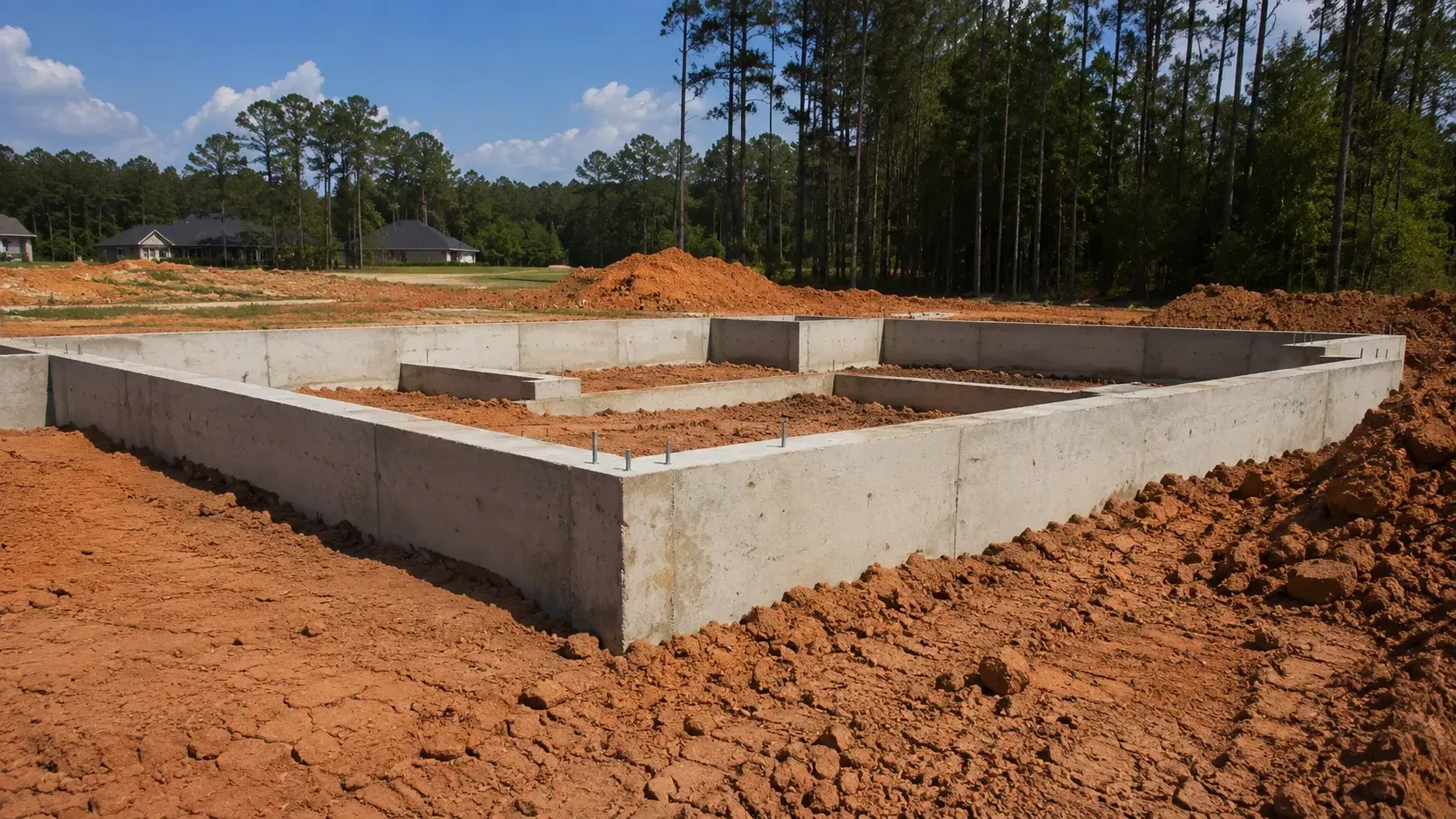
The exclusions matter just as much. Normal wear. Owner maintenance. Damage from changes you made after move-in. Weather events. And in most cases the soil itself, as opposed to the foundation built on it. In East Texas that last one matters more than almost anywhere else in the state.
Where Manufacturer Warranties Take Over
A large share of a new house is covered by somebody other than the builder, and this surprises people.
Roofing shingles, windows, exterior doors, the HVAC equipment, the water heater, appliances, garage door openers and most plumbing fixtures all come with their own warranty from the company that made them. Two practical things follow:
- Some require registration, and the window to do it is short. Nobody will remind you. Our own handover habit is to leave the paperwork with the owner, and we would rather you spend an evening registering things than discover a lapsed warranty in year four.
- Some transfer and some do not. If you sell, some manufacturer warranties pass to the next owner and some do not, and some pass only if a transfer is filed. That is a line item in a resale conversation and worth knowing in advance.
Keep all of it in one place, physical or digital. A folder with model numbers, serial numbers and install dates is the single most useful thing a new homeowner can build in the first month, and almost nobody does it.
What Texas Law Adds, and What It Does Not
This is the layer people have the most wrong, in both directions.
Texas recognizes implied warranties in residential construction. Broadly, they go to whether the work was performed in a good and workmanlike manner and whether the home is suitable to live in.
You do not receive a copy of these. They are not on the builder's letterhead. They exist regardless.
What they are not is a blanket that covers whatever the written warranty leaves out. How far do they extend? Can a contract change them? How long do you have to act, and what has to happen before a dispute can move forward? Those are
legal questions with real deadlines attached. They belong to a Texas construction attorney, not to a builder and not to an article. We are telling you the layer exists and that it has rules. We are deliberately not telling you what those rules say.
Here is the practical version. If something significant is wrong, and the builder and the manufacturer have both said no, buy an hour of a lawyer's time instead of writing another year of letters. The same goes for warranty questions on
remodeling work, which is handled differently from new construction and worth asking about on its own.
Why the Final Walkthrough Is Your First Claim
Because everything found that day gets fixed as part of the build, and everything found after it becomes a warranty question instead.
On our builds we inspect everything with you before you get the keys. That walkthrough produces a punch list, and the punch list is not a formality. It is the clean line between work that is simply unfinished and work that has to be argued about later under a different set of rules.
How to make it count:
- Take the time it deserves. This is not a lap of the house. Bring somebody who is not emotionally invested in moving in on Friday.
- Open, close and run everything. Every window, every door, every faucet, every outlet, the HVAC in both modes.
- Write down the small things. A sticking door and a scuffed baseboard belong on the list. Nothing is too minor for the walkthrough and plenty is too minor for a warranty claim.
- Get the list in writing with both signatures, and keep your copy.
- Photograph it. Dated photos of the house at handover settle a surprising number of later questions about what happened when.
Anything that genuinely cannot be seen on handover day, like seasonal foundation movement in clay, is what the structural tier exists for. Everything else should be on that piece of paper.
What to Ask a Builder About Warranty Coverage
Six questions, and you should ask them of every builder you are considering, including us.
- Can I see the written warranty before I sign the contract? The answer should be yes, immediately, without a follow-up call.
- What are the coverage periods for workmanship, systems and structural? Get the numbers from the document, not from a conversation.
- What is specifically excluded? The exclusions tell you more about a warranty than the inclusions do.
- Who do I call, and what is the process? A warranty with no named contact and no written procedure is a warranty you will be chasing.
- Which items are manufacturer-covered, and will you give me the paperwork at handover?
- Is the warranty transferable if I sell?
A builder who answers all six without flinching is telling you something about how they operate after the money has cleared.
If any of ours are unclear when you ask, that is on us to fix, and we would rather you ask.
Conclusion
Ask for the written warranty before you sign anything. Read the exclusions first. Start a folder for manufacturer documents the week you move in. Those three habits cost a couple of hours and beat any amount of reading about warranties in the abstract, because the only coverage that will ever matter to you is the coverage written in your own paperwork, whether the house goes up
around Tyler or out on acreage past it.
Ask What Is In Writing Before You Sign
If you are comparing builders, bring these six questions to all of them and see who answers plainly. We will walk you through what our contract covers, what is handled by manufacturers, and what the handover process looks like, before you commit to anything. Canfield Construction Management has over two decades of construction experience, is a BBB-accredited business with a superior rating, and handles
new home construction across Tyler, Flint, Whitehouse, Bullard, Lindale, Chandler, Brownsboro, Kilgore and Mineola. Consultations and estimates are free. Call (903) 283-0060 or request a
free consultation, Monday to Friday, 8am to 5pm.