Introduction
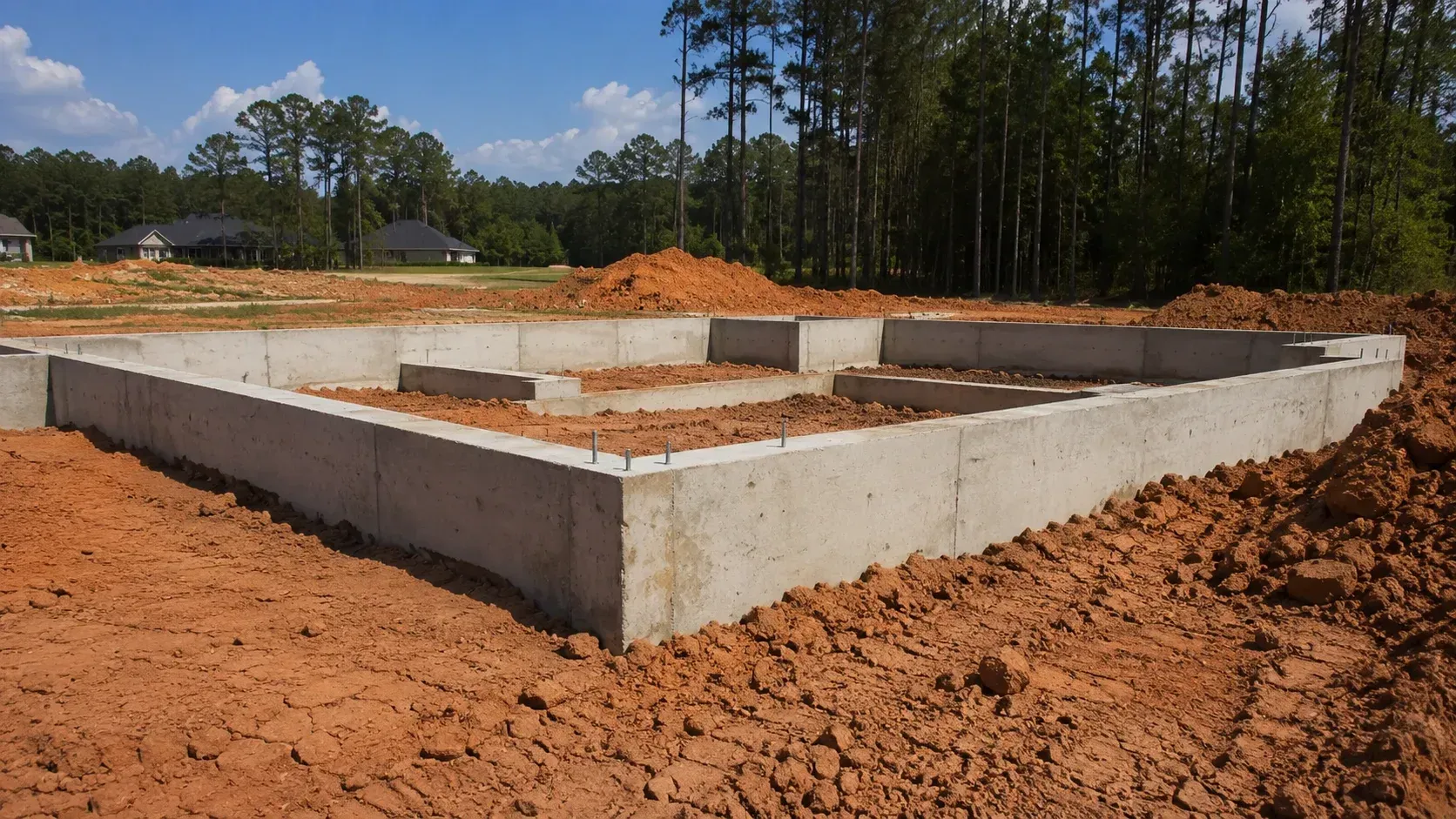
East Texas clay soil affects a new home's foundation because it swells when it absorbs water and shrinks when it dries out, and that constant movement can push, lift, or settle the structure above it. This is one of the most important factors to understand before any
new home construction project in the Tyler area, since the ground your home sits on shapes how well the foundation holds up over time.
This matters because a foundation is one of the few parts of a home that is hard and expensive to fix once problems appear. Clay soil does not stay still. It responds to rainfall, drought, drainage, and even nearby trees. When builders and homeowners understand how the soil behaves, they can plan a foundation designed to handle that movement rather than fight it. Getting this right early saves both money and stress later.
How Does Clay Soil Affect a Foundation?
Direct Answer: Clay soil affects a foundation through expansion and contraction. It swells as it takes on moisture and shrinks as it dries, and that repeated cycle applies uneven pressure to the foundation, which can lead to cracking or shifting.
This behavior is often called "expansive soil." The clay particles are very fine and hold water well, so they change volume significantly with moisture levels.
When one area of soil under a home is wet and another is dry, the ground rises in some spots and sinks in others. A foundation resting on that uneven surface has to absorb the difference, and over time that stress shows up as movement or cracks.
The key point is that the problem is not the clay itself but the change in moisture. A foundation designed and maintained with that movement in mind can perform well for years.
Why East Texas Soil Behaves This Way
East Texas contains large areas of clay-heavy soil. Clay forms from very fine mineral particles that bond tightly and absorb water readily, which is what gives it that swell-and-shrink tendency.
The region's weather adds to the effect. Wet seasons saturate the ground, then dry spells and summer heat pull that moisture back out. That back-and-forth is exactly the cycle that stresses foundations.
Not every lot is the same, though. Soil composition can vary within a single neighborhood or even across one property. This is why a general assumption about "East Texas soil" is no substitute for testing the specific ground where your home will sit.
What Foundation Problems Clay Soil Can Cause
Clay soil foundation problems tend to develop gradually, which is part of what makes them easy to overlook. The pressure from shifting soil works on the structure slowly.
Common issues include:
- Cracks in the foundation slab or walls, often appearing as the concrete responds to uneven support
- Uneven or sloping floors, where one part of the home settles more than another
- Doors and windows that stick or will not close, caused by frames shifting out of square
- Gaps between walls and ceilings, or between the wall and the floor
- Cracks in interior drywall, especially near door corners and windows
Not every crack signals a serious foundation issue. Some minor cracking is normal as a home settles. The concern is movement that continues or worsens, which points to ongoing soil activity rather than a one-time settling.
Foundation Types Used on Clay Soil
There is no single foundation that works everywhere, and the right choice depends on the soil report and the design of the home. A few approaches are common in areas with expansive clay.
Slab-on-Grade Foundations
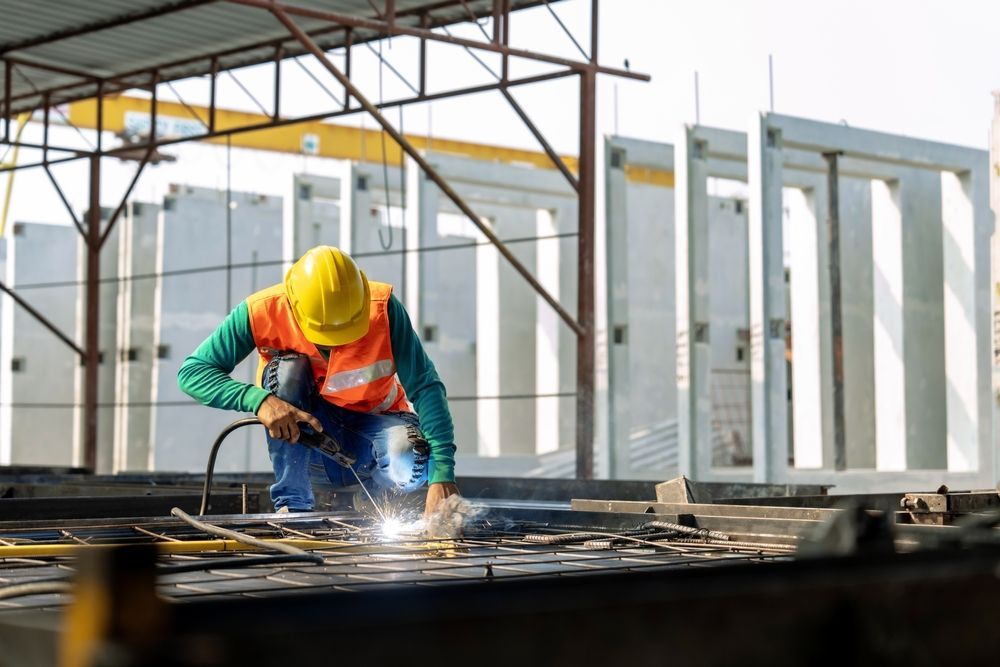
A concrete slab poured directly on the prepared ground is widely used in Texas. On clay soil, these slabs are often engineered with reinforcement, such as post-tension cables or added steel, to help them resist movement.
The goal is a slab stiff enough to move as one unit rather than cracking apart when the soil shifts unevenly.
Pier and Beam Foundations
This method raises the home on piers that reach down to more stable soil, with beams supporting the structure above. The crawl space it creates can also make future access to plumbing easier.
Pier and beam systems can be a good fit where deeper, steadier soil is within reach and the design calls for it.
Deep Pier or Drilled Systems
In some cases, piers are drilled deep enough to bypass the active upper layer of clay and rest on more stable ground below. This reduces the influence of surface moisture changes on the foundation.
Which of these fits your project depends on engineering, not preference alone. A geotechnical report is what turns that decision from a guess into an informed choice.
How Builders Plan for Expansive Soil
Planning for clay soil starts before any concrete is poured. The first step is usually a soil or geotechnical report, which tests the ground and describes how it is likely to behave.
That report informs the foundation design. An engineer uses it to specify reinforcement, depth, drainage, and other details suited to the specific lot.
Site preparation also plays a role. Proper grading directs water away from the home, and the pad the home sits on is built up and compacted to give the foundation stable, even support.
None of these steps guarantee a home will never move. What they do is reduce the risk and give the foundation the best chance to handle the soil it rests on.
What Homeowners Can Do to Protect a Foundation
Once a home is built, moisture management becomes the homeowner's main tool. Because soil movement is driven by water, keeping moisture levels around the home more consistent helps limit the swelling and shrinking.
Practical steps include:
- Maintaining good drainage so water flows away from the foundation rather than pooling against it
- Keeping gutters clean and directing downspouts several feet from the home
- Watering the soil during droughts to prevent extreme drying and shrinkage near the foundation
- Being mindful of large trees, since their roots can pull significant moisture from the soil close to the home
- Watching for plumbing leaks, which can saturate the ground unevenly beneath the slab
The theme across all of these is consistency. Sudden swings from very wet to very dry cause the most movement, so smoothing out those extremes is the practical goal.
Warning Signs Worth Watching For
Catching foundation movement early gives you more options. The signs are often subtle at first and easy to attribute to a house "settling."
Things worth paying attention to include new or widening cracks in walls or the slab, doors and windows that begin to stick, floors that feel uneven, and gaps opening around window or door frames.
A single hairline crack is usually not cause for alarm. A pattern of signs, or cracks that keep growing, is a stronger reason to have the foundation looked at by a qualified professional.
Conclusion
East Texas clay soil affects a new home's foundation because it swells and shrinks with moisture, and that seasonal movement puts uneven stress on the structure above. The result can be cracking, settling, or shifting when a foundation is not designed and maintained with those conditions in mind.
The encouraging part is that this is a manageable, well-understood challenge. A site-specific soil report, a foundation engineered for expansive clay, good drainage, and consistent moisture management all work together to reduce the risk. Clay soil is a reason to plan carefully, not a reason to avoid building. Homeowners who understand how the ground behaves are in a strong position to make informed choices and protect their investment for the long term.
Planning a New Home Foundation on Clay Soil in Tyler, Texas?
If you are thinking about building in the Tyler area and want to understand how the local clay soil could affect your new home's foundation, we are happy to talk it through. A conversation can help you learn how the planning, soil testing, and foundation design process generally works, so you can move forward with clear expectations. Feel free to
contact us whenever you are ready to discuss your project, with no pressure and no obligation.